Standard modules satisfy the broadest market. Your product has specific requirements — and generic hardware leaves real performance on the table.
Default ISP settings are tuned for average conditions. Your product deserves calibration under real deployment conditions — not a controlled lab bench.
Most engineering teams don't have embedded camera specialists in-house. Hiring and training takes years — we have 12 of them already invested.
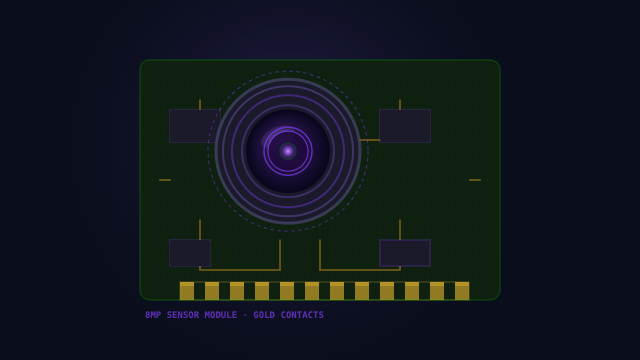
Sensor selection, PCB layout, optics, housing design — hardware built around your product's exact requirements.
V4L2 kernel drivers, sensor initialization, MIPI CSI-2, power management, error handling for production reliability.
Color correction matrix, lens shading, noise reduction, AWB — tuned under your actual deployment conditions, not a lab bench.
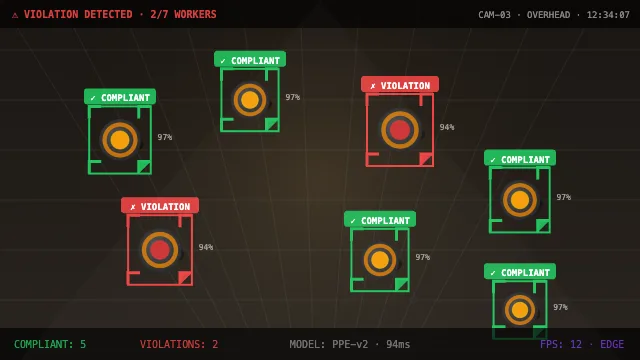
Model optimization, quantization, hardware compilation for Coral, Hailo, Jetson. Camera-to-inference pipeline design.
Camera SDK, streaming pipeline, buffer management, application API — the interface between hardware and your application.
IP69K housings, sterilization-compatible materials, IEC 60601-1, biocompatibility — cameras built to survive where standard modules fail.
Requirements analysis, sensor selection decisions, system architecture planning.
PCB design, optics selection, housing development, first prototype build.
Driver development, ISP calibration, 3A algorithms, image quality validation.
Validation, documentation handoff, supply chain guidance, ongoing support.
PieSoft is a software and hardware development company based in Bethlehem, Pennsylvania. Since 2012, we've delivered 367+ projects across embedded systems, custom camera hardware, and software development.
Our embedded camera team handles the full stack — from sensor selection and PCB design through firmware, ISP tuning, edge AI integration, and production handoff. We work with clients across the US and Europe.
What it actually takes to design a camera module from scratch — sensor selection, PCB considerations, optics, and the decisions that define image quality.
Read articleV4L2 driver development, MIPI CSI-2 bring-up, power sequencing — the firmware work most teams underestimate and what production reliability actually requires.
Read articleThe difference between lab-bench tuning and field calibration, and how to evaluate a camera tuning partner for your specific deployment environment.
Read article